
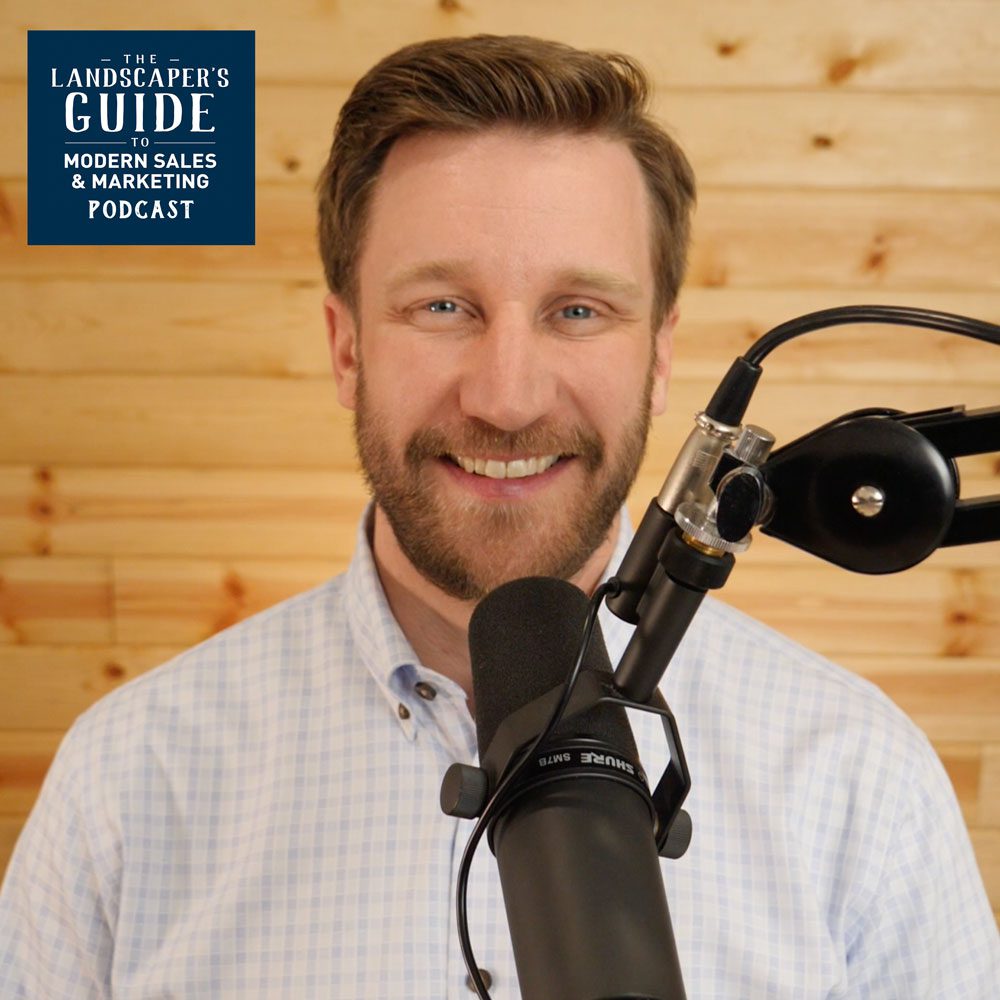
Jack Jostes is joined in Austin, Texas by Ramblin Jackson leadership team members Robert Felton and Erin Kaufold after attending an AI conference packed with practical ideas for marketing, operations, and client experience. Together, they unpack what landscape and snow business owners need to know about AI, SEO, long-form content, client data, and the importance of staying curious.
In this episode, you’ll hear how AI can help landscape companies improve FAQs, repurpose sales call insights, build better client profiles, and reduce repetitive administrative work. Jack, Robert, and Erin also talk about why human relationships still matter, how to start small with AI, and why “Grow Or Die” matters more than ever in a fast-changing business world.
You’ll Learn:
- Why long-form website content still matters for SEO and AI search
- How recorded sales calls can become better FAQ, social, and website content
- Why landscape companies should start small with AI instead of waiting for perfection
- How a “client brain” can help teams retain valuable customer knowledge
- Why people skills and in-person relationships still matter in the AI era
Connect With Ramblin Jackson Leadership Team:
🌳 Ramblin Jackson: https://ramblinjackson.com/
👤 Jack Jostes LinkedIn: https://www.linkedin.com/in/jackjostes/
👤 Robert Felton LinkedIn: https://www.linkedin.com/in/robert-felton/
👤 Erin Kaufold LinkedIn: https://www.linkedin.com/in/erinkaufold/
📸 Jack Jostes Instagram: https://www.instagram.com/jackjostes/
🏢 Ramblin Jackson Instagram: https://www.instagram.com/ramblinjackson/
Get Started With The Landscaper’s Guide:
Watch the full episode + read the transcript: https://landscapersguide.com/podcast/
Tell us where to send your beef jerky: https://landscapersguide.com/toolbox
See upcoming live and virtual events:
https://landscapersguide.com/events
Why AI Needs More Context
00:00
Robert Felton
We're living in kind of this AI silo. Like you give this meeting and this is the limited information and it's only a transcript. Like, AI is not going to have enough context to actually edit and perform like you want it to.
00:11
Erin Kaufold
Interestingly, a lot of people I talked to were emphasizing how important the people skills are. Still meeting people in person, still cultivating that relationship, and that's still really important.
00:22
Jack Jostes
One of the things that Kushboo had that I like, that I want to build, is the client brain.
00:22
Welcome From Austin, Texas
00:28
Jack Jostes
Hey, everyone.
00:28
Jack Jostes
Welcome back to the Landscaper's Guide podcast. Today I'm in Austin, Texas with Ramblin Jackson's leadership team. I've got our director of Client strategy, Robert Felton, and our operations manager, Erin Kaufold. And we just attended a conference on AI. It was mind blowing. It was so good. And we wanted to record. We just wanted to chat. We actually haven't had a chance to chat because we've been like in sessions for the past two days learning. So just wanted to share some AI takeaways with you that you might use in your landscape company, give you some insights of how our leadership team works. We go to events sometimes and welcome to the Landscapers Guide. Yeah, so right now we're, we're next to the Colorado river, but it's not the Colorado River.
01:15
Erin Kaufold
I know.
01:15
Robert Felton
That blew my mind.
01:17
Jack Jostes
It is a Colorado River.
01:19
Robert Felton
Yeah, it starts and ends in Texas.
01:20
Jack Jostes
It starts and ends in Texas. It's also called Ladybird Lake.
01:24
Robert Felton
Yeah.
01:25
Jack Jostes
And so, yeah, went kayaking. Yeah, went kayaking. So that was kind of fun because we all work remotely and it was kind of cool just to hang out in person.
01:32
Robert Felton
Yeah.
01:33
Jack Jostes
Erin, how was Terry Black's barbecue?
01:35
Erin Kaufold
Oh, it was awesome. Best smoked turkey I've ever had.
01:40
Jack Jostes
It was so good. It's really. It seriously would. So if you're listening, if you haven't been to Terry Black's and you go to Austin, you have to go there. It's amazing. And I was joking with Robert about making brisket.
01:54
Robert Felton
Oh, yeah.
01:55
Jack Jostes
Because I like that analogy. So if you've ever smoked a brisket, there's a part where it stalls out, where you're cooking the brisket and it needs to reach like 204 degrees or something, some crazy temperature, but around 165 degrees, it just stops increasing its temperature and it feels stuck and you start googling. You're like, is it going to happen? Is it going to work? And everyone's like, don't worry, just stay with it. And, and that's kind of how I feel about Ramblin Jackson sometimes. Like, you know, we're going and then you feel stuck, but you're actually getting a lot done, but you don't feel like it. Yeah, the meat's still cooking and the meat's still cooking. And we're right on the. About to burst through.
02:37
Jack Jostes
I feel like so many things with AI and I feel like a beef brisket, I guess was how I felt when I went to Terry Black's.
Why Long-Form Content Still Wins
02:49
Robert Felton
I think like an interesting place to start too is like a lot of the things that we're doing correctly. I mean, we're recording our processes. I mean, it was nice to learn that. You know, I call. You always hear less content is better. Less content is better. You mean we've confirmed that more content is very important?
03:05
Jack Jostes
Oh yeah, for sure.
03:07
Robert Felton
Yeah. There was just like little takeaways like that where it's like, oh, we are, we're not so far behind. You mean, we got a lot to do. We learned a lot of stuff. But it was also like a lot of our practices are good. They're set up to be optimized and automated and utilize AI. So that was kind of an exciting takeaway for me was just like, I mean, yeah, the brisket is cooking even though it feels like it's not. It felt a little behind. But you know, at the end of the day there was a lot of confirmations of we're doing a lot of things well.
03:36
Jack Jostes
Yeah, for sure. Especially the long form content is something that we've always done at Ramblin Jackson. And I've always said that it's mainly for customers.
03:45
Robert Felton
Yeah.
03:46
Jack Jostes
Because we customers want to read and learn and people are all like, oh, people don't have short attention span. People have a short attention spans these days. You need short content. AI gives a short thing. And that one speaker who had all this data, he was like, he was so cool.
04:00
Erin Kaufold
Yeah, he was excellent.
04:01
Robert Felton
Can you see something right?
04:03
Jack Jostes
I can't remember. I wrote it down in my pages of notes. But he's like, no, I can tell you that long form content wins. So it kind of affirmed a lot of things that did.
How SEO Still Matters In AI Search
04:13
Robert Felton
I mean, there's just like, there's so much new in AI and everyone's throwing it around and attacking a strategy and everyone's AI ing everything. So it's hard to know like what weight is of importance too. Like AI is like, these are the 20 things you need to do. And this thing changes everything. And this thing barely matters, but in AI world, they all look equal. And I think it was really cool to see what was more weighted, what was less weighted, and just kind of where we're at. And a lot of the big weight were doing well at.
04:39
Erin Kaufold
Well, one speaker was talking about how SEO is still relevant and I thought that was really interesting. With AI, it's still very important to have that dialed in well.
04:48
Jack Jostes
And one of the things relating to SEO and getting found in AI searches people ask about was your website. And I really, in my new book, I'm talking about how your website is a source of information from which AI extracts information. And that same speaker shared that 50% of the citations in ChatGPT are the business's website. So if you have a puny, short website with pretty photos and that's it, you're not going to show up. Some ways, not a lot has changed was one of my takeaways.
05:24
Robert Felton
I did see one that was interesting is just like updating, you mean the information every six months, like having the citations and the back sources. Like you can't just make statements, they have to be backed up and AI can quickly figure out and check that information. So I thought that was interesting too, of like you won the award and you just have the picture of it, like, that's useless to AI, but if you have the award, you have the information and you have the backlink, then it's extremely valuable. So I think that was interesting. There's, there's little tweaks there that are super important for ranking and to feeding the AI bots.
05:59
Erin Kaufold
Understand how the AI bots work. Yeah, really?
Reverse Engineering What Clients Ask AI
06:02
Robert Felton
That was cool. Just seeing like, oh, and reverse engineering, I thought was a really interesting concept of like, instead of being like, you mean, they're like, oh, here's some examples of citations that you should look at. It's like, no, no, you got to reverse engineer what your clients are looking for, what those citations are and what's important and val to them. I mean, you can't just go off the general, this is what AI search is doing. So I thought that was really cool too.
06:26
Jack Jostes
I liked that. And one of the takeaways that I had for our commercial clients kind of related to that reverse prompt engineering is a lot of people will tell AI, you know, I'm a homeowner looking for a new property in XYZ area. Like, they'll give AI a lot of context or it knows that about you. And so one of the things I think we're already doing for our commercial clients is building specialty pages for if you do hotels, if you do HOAs, if you do municipalities, we are already building those pages and I want to optimize them so it calls it out. Like if you're a property manager of an HOA looking for a landscape company that can give you.
07:13
Robert Felton
I think that's a perfect example of the long form is like we're talking about hotels and how we do services for hotels, blah, blah. But we also need to say if you're a hotel manager or a hotel property manager, then. So it's just like those little tweaks. But again, the meat is pretty correct. The long form, this specific content, you know, targeting specific people. But there's just little things that I'm excited about.
Start Small And Build Ugly Version One
07:36
Erin Kaufold
Yeah, we learned so much. It was overwhelming, really. And it was like, where do we start? So much to do. But I think my big takeaway is start small, Just do something. Even if it's, find one tool, use it every day for 15 minutes, really master it, figure it out. That was a big takeaway. Just do it. Just start using these tools.
07:58
Jack Jostes
I liked that. So that was a message from both Jason. Well, many people had a similar message, but Brittany Muller was really good.
08:04
Erin Kaufold
Yeah, she was excellent.
08:05
Jack Jostes
And so was Jason Swank. And Brittany talked about getting to version, an ugly version one fast. And I think that's something that holds people back in general when they're creating anything. Like right now my book is being edited and I, My process has always been to get to an ugly rough draft. I literally like voice it. Like I hand write an outline and then I like talk.
08:28
Erin Kaufold
Yeah.
08:29
Jack Jostes
And then I go from there. So getting it. Getting an ugly version 1 with AI is what is going to. And for our folks listening who are landscape companies, getting AI started at your. At your landscape company and being okay with it being ugly and messy at.
08:46
Erin Kaufold
First and being okay with it failing.
08:48
Jack Jostes
And failing is the only way that you're going to innovate because you're not going to nail it out of the gate. So I liked that. And then as far, yes, it was overwhelming. We saw Kushboo.
09:00
Erin Kaufold
She was excellent.
09:03
Jack Jostes
You know, so Kushboo was so good. Oh my gosh. She was, I mean, like mind blowing. Like face melting. Like I was telling somebody, it was kind of like seeing your favorite rock band and you're just like your face is melted by them. That's how. That's what it was like seeing her talk. And you know, Jason Swank kind of broke it down. And he made this little quadrant of things that are high repetition. What was it? What was it?
00:09:29
09:29
Robert Felton
High repetition, high attention. Yeah, Yeah. I can't remember. But he had a quadrant.
09:35
Jack Jostes
But he had a quadrant. And it was basically the point of it was to get into that upper right quadrant of what are the repetitive tasks that you're doing that take a.
09:43
Robert Felton
Lot of focus every day?
09:44
Jack Jostes
That you don't like doing. Yeah, that you don't like doing. And so one of them, for me, I've. I'm. I've lost track of the number. I think this is our 325th podcast episode. So I've been doing this every week for years, like six years. And I have a prompt and I have a template, and every week I get. I get a little bit better at it. And my takeaway was I need. I'm going to build a Claude skill out of it. So that was my small thing is to, like, take this process that I've done literally over 300 times and. And build a Claude skill out of it. So last night I started talking to Claude and that was another thing that many of the speakers said, is to ask Claude how to do what you want it to do.
10:29
Erin Kaufold
The outcome.
10:29
Jack Jostes
The outcome. So you tell it the outcome of like, I want to create a Claude skill to automate the formatting of my podcast blog post. And here's my. Here's an example of. And oh, and then feeded ex of ones that are well done. So that was. And ones that don't work, and then ones that don't work. Right.
10:47
Robert Felton
That reverse engineering, I think, is a huge takeaway. It's just like, can you think about the whole process and can you. And then use AI to build the thing you want by reversing it a little bit? Yeah. So.
Building A Client Brain For Better Service
10:59
Jack Jostes
And then one of the things that I. That Kushboo had that I like, that I want to build is the client brain. And this was something I think landscape companies would benefit from too, eventually. Of. You know, we have, at Ramblin Jet, we have clients who have worked with us for over 10 years, and we have really good notes in the CRM and we have in Asana, you know, entries from every meeting. And we started using an AI note taker a couple years ago, Fireflies. And we have all that data. But the problem is it's overwhelming, right, because there's. There's like, you can't read it all.
11:35
Erin Kaufold
You can't read it all.
11:36
Jack Jostes
Some of these clients, if we've Met with them twice a month for five years is like, wow, that's a lot of updates. And so building this client brain that. And we can feed all of that and like prompt it to be like, hey, what kind of content does this client like? What do they dislike? And then if and when we have turnover, the client brain is going to have all of that historical knowledge. Now it's not going to have the relationship with people that you can't really replace that. But I think things like this client brain allow your client facing people to prepare faster for meetings and give clients a good experience.
12:17
Erin Kaufold
Absolutely, absolutely. So important. Yeah. Enhance the client experience. That's what it's all about.
12:22
Jack Jostes
Yeah, yeah.
12:23
Robert Felton
And I think the client brain takeaway that I enjoyed was context is just so many. We're living in kind of this AI silo. Like you give this meeting and this is the limited information and it's only a transcript. Like AI is not going to have enough context to actually edit and perform like you want it to. So by giving it context and notes. So building context on important clients, like especially in commercial, if you only have 40 clients and they're your entire revenue and they're millions of dollars each, you know, having profiles built on these clients, that can also help. That's just a great place to start on the client brain because the client brain is cool, but it's a lot. But if you can at least start giving context and information and less just here's transcripts of meetings.
13:05
Robert Felton
But also like these are times they've denied content. Here's problems we've had, here's successes we've had. And just starting there, I thought was such a cool concept of like, here's the context for you so you can have a little more intelligence to make more decisions for me. And yeah, I think it's what I really need is a lot of my. My transcripts are just these three meetings uploaded into my project and I'm trying to figure it out, but I need to have more of a base for each client and each system. So. Yeah, I'm looking forward to that.
13:36
Jack Jostes
Yeah, me too.
13:37
Robert Felton
Yeah. Because it's all up in here. I mean, yeah. Been working here for a while and I have these notes on these clients, but it's hard to share with the team easily and it's hard someone else is going to write the content. You're going to have to go shoot a video with them. Having and being able to share.
13:50
Jack Jostes
And I always, you know, I'm in our client strategy meeting, I'm in our company meeting. And I hear these updates like, and I remember our clients and I'm in a mastermind with them and we have really good notes. I think we have above average notes.
14:04
Robert Felton
I agree.
14:05
Jack Jostes
Partly. I wanted to acknowledge one thing that I think is working well and that was that over a year ago we standardized a client meeting prompt that everyone uses after a client meeting. Because before it was like account manager A would type notes his way and account manager B would type them her way. And then it was like the formatting of it was just inconsistent. And now it's standardized. And I think that we've heard from other ramblers that they're like, hey, I feel more connected to what's going on with our clients already. And then, and then Kushpu blew our mind with a way that I didn't even think possible. So. Right. I was like, wow, that's the next level of. What I think you're talking about is the self learning agents.
14:52
Robert Felton
Yeah.
Moving From Linear Automation To AI Agents
14:52
Jack Jostes
So instead of like. Because a lot of the automations that we've done up until this point have been linear, like when this happens, that happens. And that's amazing. But what can happen with these self learning agents is like when this happens, that happens. And it knows to all automatically do this whole other chain of events and it's like a circuit of.
15:12
Robert Felton
It was crazy. There was like this web of things and when you asked the brain questions, different parts would glow so you could see where it was like grabbing information. I don't know what Kushpu talked about seemed impossible. Just. You mean I didn't even know. Like I have an understanding of AI. I love the linear processes, they trigger different things. But Kushpu was like, you could go even further.
15:30
Erin Kaufold
That's the next level.
15:31
Robert Felton
Oh, it's crazy.
15:32
Jack Jostes
You know, you know, so you know, it's amazing. I spoke at an agency event just two or three weeks ago called Elevate.
15:41
Robert Felton
I know people were talking, they're like, you're a jack. I'm like, no, I'm not.
15:44
Jack Jostes
Yeah. Robert and I get mixed up for each other. That was pretty fun.
15:47
Robert Felton
Yeah, it happens every time.
15:48
Jack Jostes
It does, it does. And it was amazing speaking at that event. And then. And I told you guys, oh, you gotta see Kushboo and you gotta see Jason Swank. Because I saw them both present amazing content. They presented new content at this show.
16:03
Robert Felton
That's wild.
16:04
Erin Kaufold
People are telling me.
16:04
Jack Jostes
Yeah. So it was, I was expecting to see like the same thing that they did three weeks ago. And it Was. It was new.
16:12
Robert Felton
That's.
16:12
Jack Jostes
It was. It was new and better.
16:14
Erin Kaufold
Yeah.
16:15
Jack Jostes
And so. And that was partly because they're just power users of AI.
16:18
Erin Kaufold
Right.
16:19
Jack Jostes
So I think. I think going to these shows is important, partly because I think you played basketball in college, right? And you. You. You were into running.
16:28
Robert Felton
Yeah, I was. Ran a lot.
16:29
Jack Jostes
Yeah. But I think what I'm getting at is, like, when you run with somebody else who's better than you or you play basketball, somebody who's better than you, it makes you better. It makes you think, like, oh, you know what? I could try a little bit harder. I could run a little bit faster. And that's. To me, part of the experience of this show was I was telling Erin.
16:47
Robert Felton
And a bunch of people that I think it's Ender's game. But there's just that once you know, it's possible, it's so much easier to conceptualize yourself. Like, that's what blew my mind, is just like, wow, they can do that. Like, why can't I do that? And it's kind of like you're talking about in a sport, like, that person can run, they're working harder, they know something that I don't know. How can I get that information? But when it's vague and feels impossible, it's hard to materialize or imagine. But now it's like, oh, they could.
17:13
Erin Kaufold
They could do that.
17:14
Robert Felton
And, like, they raised their hand, 44% of them could do that. Like, I could do that.
17:18
Jack Jostes
Right.
17:18
Robert Felton
You know, and that's just such an empowering feeling. And I think that was one of my favorite takeaways. It's just like, you know, these guys could do it. I bet we can. We've always been pretty tactful and smart, and we've always accomplished it. So. Yeah, like, why not? Yeah. So I think that was cool. It's just. And it seems so vague, and now all of a sudden, it's seems totally possible.
17:35
Erin Kaufold
It's a good reminder to stay curious.
17:37
Robert Felton
Yes, that's so true.
17:38
Erin Kaufold
Right. And to have an open mind.
17:40
Robert Felton
Grow or die.
17:41
Erin Kaufold
Exactly.
17:41
What Grow Or Die Means In The AI Era
17:42
Jack Jostes
Well, so, yeah. So I wanted to ask you on the podcast, what does grow or die mean in the AI world? So grow or die is one of our core values. It has been for eight years. Nine years and nine years ago, I remember hearing people talk about AI kind of not really. Not at all. Like, it was nowhere near as accessible. What do you guys think it means now?
18:04
Erin Kaufold
Yeah, I think it's that staying curious, wanting to learn more, wanting to do better, have an open mind. Not be stuck to past processes.
18:13
Jack Jostes
Yeah, I, I, what do you, what were you gonna say? You go ahead. I was just gonna say that one of the things that they shared was to, yeah, be willing to completely blow up a previous process to be redone by AI, because I think a lot of early adoption of AI, especially with ChatGPT, has been like, all right, we're just kind of bolting AI on here. But now, like, with Claude Code and all these other different tools, like, you might even start with AI in a way that you never would have imagined possible. And so that I think is part of Grow or Die is working through the discomfort of, well, I've been doing it this way for 9, 10, 15, 20 years, and now there's a whole new way that was never a whole new way today.
19:00
Erin Kaufold
And by the way, like, a month from now, it might be another whole new way. Yeah, it's just constantly changing.
19:05
Jack Jostes
So. It is constantly changing. And that is kind of disturbing also. At the same time, it's exciting and it's unsettling and all of the things. Another thing Jason Swank said that I liked was you really only need to be one step ahead of your competition in this because I think sometimes you go and see people like Kushboo. She's my favorite.
19:30
Erin Kaufold
Did we mention?
19:32
Jack Jostes
She's like, way ahead of us. Right. And how many landscape companies are anywhere even close to that? Right. They're not. Like, we work with our clients, and the ones that are already using AI a little bit are that much far ahead. But people are going to catch up. But if you can adopt and implement faster, I see that as an advantage. Or you'll be a key message was. Or you'll be replaced by somebody who is. And I really see that.
20:02
Erin Kaufold
Yep. Yeah, totally.
20:05
Robert Felton
Yeah. That goalpost is always moving. So, I mean, I don't know. I think something I liked is you just can't be attached to that old process. You have to be able to step away from it and remove yourself and your ego from that equation. And that's not an easy thing to do, especially when you, I mean, a lot of us take a lot of pride in the work we do. We work hard, and we're proud of the work we do. And you could still be proud, and you should still be proud, but how you get there might change, and it could change a lot. So. Yeah.
Automating Repetitive Admin Work
20:34
Jack Jostes
Yeah, I, Yeah, it was, you know, I was thinking about, like, autonomous mowers is a similar thing. Like, autonomous mower. Like, we're here in Austin. And I've seen 12 driverless Waymo cars. I was. I was at a stoplight and, you know, there are two turn lanes and I'm getting ready to turn left. I look right and there's no person driving that car. And one. One human oversees 50 Waymos. Okay, that's wild.
21:05
Erin Kaufold
That is interesting.
21:06
Jack Jostes
So it's just. It's just. I never would have thought of that. And now they're literally here driving people around.
21:14
Erin Kaufold
Yeah. I mean, that's the thing. We don't know what's next.
21:16
Robert Felton
Yeah. But that's also exciting.
21:19
Erin Kaufold
It is exciting. Yes.
21:20
Robert Felton
Yeah.
21:21
Erin Kaufold
Who knows?
21:21
Robert Felton
So one of my favorite things that they brought up too was just like, I don't know, I feel so clever using all my tools. Like Fireflies goes into chatgpt and then chatgpt goes into my software. And, you know, one of my big takeaways is a lot of people here have managed to better connect their linear processes than even we have. And I'm feeling pretty good about it. And that really should showed me like I need to catch up of just like, why am I copying and pasting this thing into here and downloading this PDF? Like it sounds like a robot can do that for me and get all the way, like four or five steps ahead of me. So that's something I'm just super excited about.
21:56
Robert Felton
Of just like, I mean, I was excited that were doing this and it's like, oh my gosh, like it can be faster, easier and then they're all kind of things I don't particularly love. It's another tab and another thing I need to copy and paste and move around and yeah, gotta click submit and there's a lot of human mistake and all of that. Just basic human mistakes can be removed so quickly. Of just like in Asana, I forgot to click the button and I get those emails from Asana.
22:22
Jack Jostes
I love that. Yeah. Did you forget to do the most important part?
22:25
Robert Felton
Absolutely did forget to do the most important part of Asana. So it's just like there's certain things where it's like, I'm not attached to that work. It's not something that feeds my ego. It's not something that I find power and it's something that human error is a problem there and I could avoid it. You mean?
22:40
Jack Jostes
Well, well. And not everyone feels that way.
22:42
Robert Felton
Yeah.
22:43
Jack Jostes
In fact, some people are like really attach to how they did those things and they can't or won't change and.
22:51
Robert Felton
It's a hard time for them.
22:52
Jack Jostes
It is. It is a really hard time for them. I'm excited by it. I also, you know, they shared some stories of AI gone wrong. And I'm thinking about even on our own team, we infamously had a client facing person chatgpt an email draft and then not reading it and sending the wrong client name to a client and they're like, who's Matthew?
23:16
Robert Felton
And it had a poem in it.
23:17
Jack Jostes
Well, the poem was actually a different person. Yeah. So then another person wrote a poem and I was like, what is happening? You know, so I think in all of this it doesn't replace people. It should, it should alleviate, hopefully the administrative part. So that way you can read that final thing and comprehend it and be like, you know what, this doesn't sound right. McDonald's had AI drive through order takers and it went terrible.
23:49
Robert Felton
Yeah.
23:50
Jack Jostes
And they, and they discontinued the whole thing, you know, because they were, you know, people would get, you know, I don't know, ice cream and they'd say, you know, would you like a Coke with that?
24:02
Robert Felton
Right.
24:03
Jack Jostes
And they're like, right, no, I don't want to Coke with my ice cream.
24:05
Erin Kaufold
Right, right.
24:05
Jack Jostes
And the A is like, why not? What's the matter with you? Or something. I don't know. Yeah, I don't know. I don't know.
24:14
Robert Felton
Absolutely get this.
24:15
Jack Jostes
But also I do see, you know, an opportunity for AI phone answering. So landscape companies actually, I don't know, we're using a human answering service and.
24:30
Robert Felton
Yeah,.
24:33
Jack Jostes
I don't know. My point is that I think that there could be a way that as far as solving problems for landscapers, one problem that related to the whole show, sales and marketing, everything is unanswered phone calls.
24:47
Robert Felton
Oh yeah.
24:48
Jack Jostes
I think that having an AI answer it could better than letting it go to voicemail. And best is why just ring out.
24:55
Erin Kaufold
More than it ringing out.
24:56
Jack Jostes
Yeah, let it ringing out worse. But why not outsource that to a call center? You know, we have a client using a call center and they kill it. They do, they kill it. They answer the phone, they fill out a form that we created. It automatically creates a little ticket in their sales CRM. And now they're not typing and copying and pasting, to your point, anything from an email. They just open their sales CRM and click the phone number and they're like, hey, Erin, we saw that you called about lawn care. How can we help?
00:25:29
Turning Sales Calls Into FAQ Content
25:29
Robert Felton
So I think one last real fun one is like a lot of people are opposed to, I mean, we're just Working through call tracking, you know, trying to increase quality. Like you could track the calls that your sales team is making. And you always hear, oh, this call is recorded for training purposes, blah, blah. And what I thought was so cool is a lot of clients, they're like, you can't use the Internet to find FAQs for your FAQ page because FAQs are one of the most important things for AI. What you should do instead is use your data. So what they did is they uploaded just hundreds of calls and said, what are the most questions that my actual real human customers ask? And then they developed real FAQ content based off of real questions and real conversations from their own data.
26:13
Robert Felton
So these are actual questions that you're probably asked hundreds of times. So the content is actually going to make your life easier. And I think that was one of my favorite takeaways that was more client specific of like, let's stop asking Google what people are asking. Because it's always like, you know, they're just kind of fluffy questions or everyone has them. Yeah, everyone has them.
26:31
Jack Jostes
That's a really good point.
26:31
Robert Felton
They're all doing the same inference.
26:32
Jack Jostes
Everyone is using the same tools to research faq. FAQ content is amazing. Yeah. Because you can. Yeah, humans love it, AI loves it, Google loves it. But most importantly, human customers love it. And yeah, so with Lead Wrangler, we're rolling out Lead wrangler for our clients and we've had some resistance from clients of like, oh, I don't want these calls recorded. And when I heard that person speak, I'm like, oh, we could automate the transcript into an AI tool to feed the FAQ content.
27:01
Erin Kaufold
Yeah, right.
27:02
Jack Jostes
And then that can go, that can become social media posts because people would.
27:05
Robert Felton
Yep.
27:05
Jack Jostes
You know, there's your content, there's your social media, there's an email content. You're. Yeah, I'm.
27:10
Robert Felton
But it's just like if you don't have that data, you can't be successful. So you're paying money to get leads, giving you great information, and then you're just letting it kind of go away. So you gotta think about, can I use that data to make interesting decisions? Content, feed my entire, you know, FAQ content, my social content. Yeah, it's just you have such value in the things that you're collecting.
27:32
Jack Jostes
Well, and also it can train your chatbot on your website. So this is a great example of that self learning agent, that one call transcript can feed all of these different things that otherwise it's just stuck in the owner's head.
27:51
Robert Felton
Yeah. And just thinking, I mean, I can't tell you my attempts. I have to tell them about how much blank costs or how this process works. You know, hundreds and hundreds of times they say that it's the most annoying thing they do on their job. And I'm like, well, if we had all those phone calls recorded, you mean.
28:04
Jack Jostes
Yeah.
28:04
Robert Felton
Then you have really good content to be able to actually help you and make your life faster and easier, which, that's what technology is kind of about.
Why People Skills Still Matter
28:11
Jack Jostes
So cool. Erin, any final takeaways that you want to.
28:14
Erin Kaufold
You know, interestingly, a lot of people I talked to were emphasizing how important the people skills are. Still meeting people in person, still cultivating that relationship, and that's still really important. So when you can meet people in person, keep building that person relationship. Very important. And then I think for our landscapers, like, the client brain seems overwhelming and you can just start small. Do if you get a Google review, plug in Claude, help me respond to this and that. That could be your use of AI.
28:45
Jack Jostes
For the moment, yeah, for sure. Starting with something easy, like getting started is the most important thing. So my favorite AI tool today is Claude. We've been using, and I've used ChatGPT. I use Gem sometimes I find Gemini to better. You know, it's funny. It does. It does. And it depends. Like, Claude has a really hard time remembering, like, what day it is.
29:07
Erin Kaufold
Yes.
29:08
Jack Jostes
And having any kind of context of time. I'll be like, today is, you know, Wednesday the 13th. Write an email about next Wednesday, which, you know, should be 13 plus 7 is the 20th.
29:18
Erin Kaufold
Right.
29:19
Jack Jostes
But instead it's like, it writes a draft and it's like Wednesday the 25th, and it's like, of what month and year what did. So it noticed the same thing. Yeah.
29:27
Robert Felton
Did you see Kushboo's slide on that? I was wondering what you guys thought about that one. It said ChatGPT is pretty good for a more creative conversational tone. Geminis of extremely proficient Google Assistant. And then Claude was more technical in coding. Do you remember that slide?
29:42
Jack Jostes
I do.
29:43
Robert Felton
I thought that was cool. I was wondering, just, I don't know. I mean, I'm usually in chat gbt. I'm doing a lot of creative sales, you know, based content. So it works really well for me. I haven't experimented too much with Claude. I do use Gemini. So it's just was. I was curious if that resonated with y' all or not really.
29:59
Jack Jostes
So I, you know, I find I like using Gemini for Research.
30:04
Robert Felton
Okay.
30:04
Jack Jostes
So I find the research when I'm in Gemini to best interesting. And Claude doesn't produce such long. Like I do like long form content, but like there's something like too long about ChatGPT where it's like, whoa, this is way too much information. And I find that Claude, I'm able to train it on my voice and it remembers it better. Instead of like I used to have to tell ChatGPT and it was uploaded like, I don't want emojis.
30:37
Robert Felton
Right.
30:38
Jack Jostes
And it would still be like, here's stars and moons and like smiley faces. And I'm like this. I do not communicate like this. Whereas when I use Claude, it's. It remembers things a little better. Yeah, so that's been my experience, but I think. But ChatGPT just got way better. Like a couple weeks ago, their design tool, I made a graphic for the first time and ChatGPT, that turned out good.
31:01
Robert Felton
Yeah.
31:01
Jack Jostes
Because usually, yeah, I've made Me too.
31:04
Robert Felton
We're done.
31:05
Jack Jostes
But I made one the other day. Yeah. So. And it keeps changing. So one thing that I learned that I really liked from Jason Swank was to save your prompts outside of the AI tool. So even if you build a Claude skill, save that stuff somewhere else. Because he's like, Claude was acting up the other week. So I just deployed Manus instantly and it accessed these other tools. All right, well, everyone, thanks for listening today. It's been fun. If you haven't gone to an in person trade show with people on your team, you should. We hope to see you at some. We're going to be at the SIMA Symposium in Cincinnati, Ohio. We're going to be at Elevate in Tampa, Florida. And if you enjoyed today's podcast, subscribe@landscapersguide.com and I'll send you my top three podcasts right away.
31:57
Jack Jostes
And you'll get our weekly podcast and invitations to our events. My name's Jack Jossas. Thanks so much for listening to the Landscaper's Guide and I'll talk to you next week. Bye.