
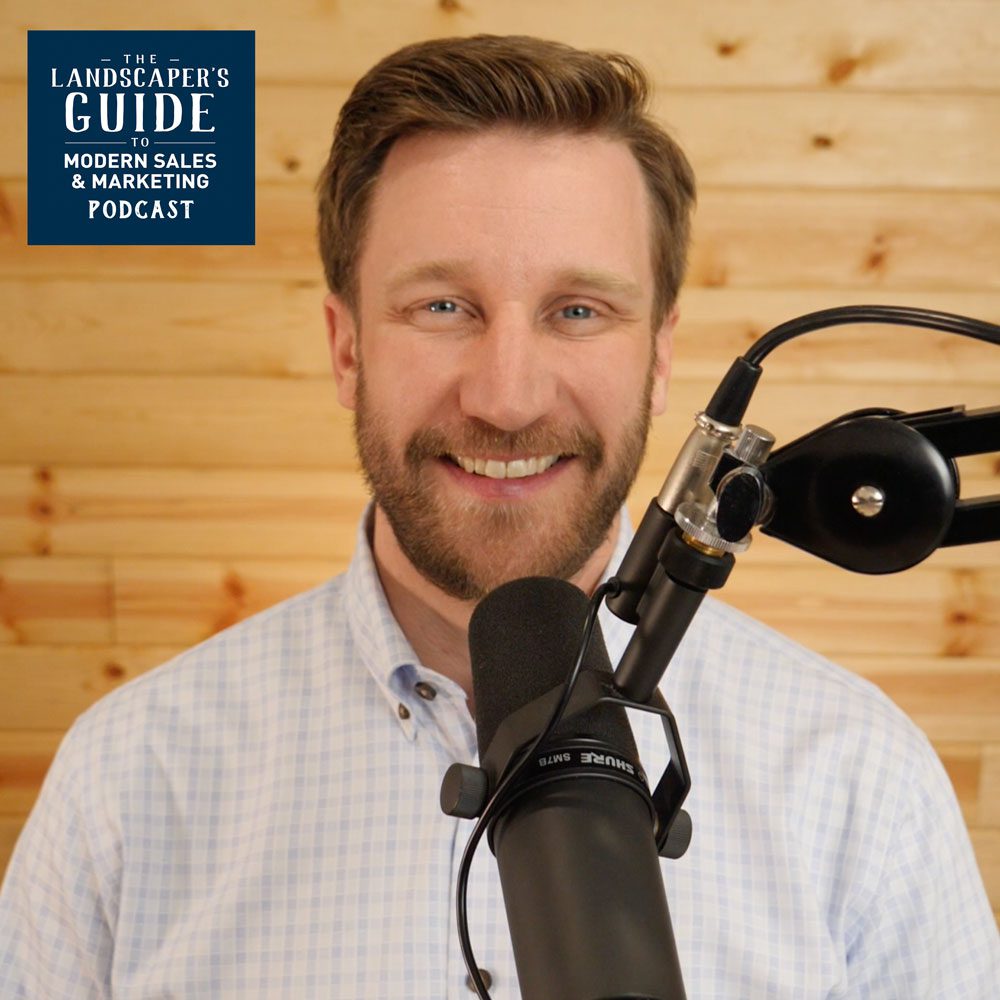
About Abe Faria
🌳 CMS Landscape (Chris Mark and Sons): https://cmslandscape.com/
👤 Connect with Abe Faria: https://www.linkedin.com/in/abram-faria-01aab81ba/
📸 Personal Instagram: https://www.instagram.com/cmslandscape/
🏢 Company Instagram: https://www.instagram.com/cmslandscape/
Email Abe: abe@chrismarkandsons.com
Get Started With The Landscaper’s Guide:
🎧 Watch the full episode + read the transcript:
https://landscapersguide.com/podcast/
🥓 Tell us where to send your beef jerky:
https://landscapersguide.com/toolbox
📅 See upcoming live and virtual events:
https://landscapersguide.com/events
Why Firing Clients Can Protect Your Team
00:00
Abe Faria
Firing people, clients to protect your employees and your business. That's a hard thing for companies to do. We have something with an acronym called bsbo. It's called better served by others. So we have one of those clients, we'll actually say we think we need to BSBO them. Sometimes we can have self inflicted stuff and then we get annoyed with the customer and they're annoyed with us. But is it something that is fair?
Introducing Abe Faria And CMS Landscape
00:24
Jack Jostes
Hey, everyone, welcome back to the Landscaper's Guide podcast. Right now I'm on the Cape and at the Landscape COD conference. And today we're interviewing Abe Faria from CMS Landscaping in Bourne, Massachusetts. Abe, welcome to the Landscaper's Guide.
00:41
Abe Faria
Thank you. Thank you for having me. It's a pleasure being here.
Services CMS Offers And How The Company Is Structured
00:44
Jack Jostes
Yeah. So tell us a little bit about CMS Landscaping. What does your company do?
00:49
Abe Faria
Yeah, so we're a full service landscape company. You know, anywhere from, you know, general maintenance, the lawn mowing, the cleanups, the mulching. We do design, build, install, whether it's a small patio or, you know, complete landscape, brand new house, dirt, parking lot, you know, getting it designed and installed. We have lawn healthcare program and the only thing we really don't do is tree work. That stuff will sub that stuff.
01:19
Jack Jostes
Do you do some tree trimming though?
01:20
Abe Faria
We do pruning. You know, if it's, you know, pole saw, you know.
01:25
Jack Jostes
So you guys do lawn care?
01:26
Abe Faria
Yes.
01:27
Jack Jostes
Do you do tree, plant health care or.
01:30
Abe Faria
Yes, we do.
01:30
Jack Jostes
You do, but it's really the tree removal.
01:33
Abe Faria
Tree. Yeah.
01:34
Jack Jostes
Okay.
01:35
Abe Faria
Yeah, but we don't have climbers or bucket trucks or stuff like that. Yeah.
02:51 – Abe’s Career Path From Mowing Lawns To General Manager
01:39
Jack Jostes
Well, great. And so what position are you in at the company now?
01:42
Abe Faria
So I'm the general manager. I've been in that position for probably about 10 years now. I started out just mowing lawns a little bit about myself. I started in high school. One of the owners, Brian Mark, him and his brother owned the business. Brian was my history teacher. And I always say I find it. I was shocked the day he actually hired me because I wasn't always the greatest student.
02:08
Jack Jostes
Okay, so the owner of the company was your high school, which subject?
02:14
Abe Faria
History teacher.
02:14
Jack Jostes
History teacher. And he also had like a landscape company on the side.
02:19
Abe Faria
Yeah. So it was his dad's business. So CMS stands for Chris Mark and son's Landscaping. We're trying to brand it into cms. A little easier to say. So, yeah. He was doing landscaping part time, full time teaching and then transitioned into running the business.
02:39
Jack Jostes
Yep. Well, you're the second person I've interviewed on this podcast whose landscape company was founded by a high school teacher.
02:46
Abe Faria
Oh, really?
02:47
Jack Jostes
Yeah. Well, I guess in this case, the founder was his dad.
02:51
Abe Faria
Okay.
04:23 – Recruiting, Culture, And Investing In Employees
02:51
Jack Jostes
But anyways, that's just an interesting tie in. So you started out just in high school? Spring summer job mowing lawns. What are, through the years, some of the other roles that you've done at the company?
03:04
Abe Faria
Yeah, I feel like I've probably worn every single hat.
03:06
Jack Jostes
I bet you have.
03:07
Abe Faria
Yeah, it's been 27 years. So, yeah, I started doing that, obviously worked my way up to crew leader, became an account manager, became an ops manager. There were plenty of times I actually did all of that together and worked my way into general manager. They gave me a career path. I didn't start the landscaping thinking I was going to do this for the rest of my life. But they were a growing business and they invested their time in me and sent me to some college classes and worked my way up. And here we are today.
03:45
Jack Jostes
That's incredible. How many people work there during peak season.
03:48
Abe Faria
So we'll probably have just over 50 employees between field staff and office staff.
03:54
Jack Jostes
That's incredible. Well, so people talking about those people. And I love hearing your story. So yesterday you came to my presentation of the landscapers ultimate guide to recruiting a players, which is all about attracting and retaining what I call a players. These are the people that are a culture fit, they're a skills fit. They're really the engine of the company. They're essential to small business. What were some of the things that stood out to you from that presentation?
04:23
Abe Faria
Yeah, it was a great presentation, so well done there. Some of the things that stood out were you talked about building a culture and investing into your employees and showing that you're willing to invest into your employees to keep those players and to recruit new people. Right. So I think that's really important. And that was great. The other thing you talked about was firing people clients to protect your employees and your business. That's a hard thing for. For companies to do and to understand how that can affect in a positive way your company and employees.
05:09 – The Real Cost Of Toxic Clients On Account Managers And Crews
05:09
Jack Jostes
Yeah, yeah, it is. So were part of the presentation was empathizing with pains of landscape employees. So like one is it is physically demanding work. It's outside in the elements, their schedule. There's a lot of just stress that comes from the weather and then also the stress for account managers. And you said you were an account manager at one point? Yes, of clients. And so we're all really in the service business. I serve clients, you serve clients. If we didn't love serving clients, like, we shouldn't really be in business at all. So I'm just prefacing that what I'm about to say is rooted in serving clients. So. And that's it's kind of this weird way of going about it. But what we're hearing from the audience is that having toxic clients is really stressful, especially for the client facing account manager, foreman, project manager.
06:13
Jack Jostes
It kind of depends on what company you're in. So I was wondering maybe without mentioning specific people, can you share some stories from real life that either of clients that you managed or clients that you saw were really toxic to your team? And again, not demanding clients. Demanding clients are great, but there's a level of respect that's needed in the work and when it gets outside of that, it can become toxic and really burn people out.
06:41
Abe Faria
Yeah, yeah, there's, I mean over the 27 years, you know, lots of examples. But you have clients that, you know, there's demanding and then there's unreasonable demands, you know, or they can be rude to your employees. Really we want clients that want to interact, but they've got to interact, you know, the correct way, you know, being rude to a field staff, you know, constantly, you know, emailing the account manager or complaining about things that really just shouldn't be complained about, you know, wasting our resources to fix something that actually looks really good. You know, having to send crews back not being, you know, not. And it's not something that we can charge wasting the time of the account manager to have to go, you know, send emails to go out and visit the property for unreasonable stuff.
07:43
Abe Faria
It takes a lot of time and it's a time suck when a client can be unreasonable and it just isn't the right fit. We have something with an acronym called bsbo. It's called Better Served by Others. So when we have one of those clients, we'll actually say we think we need to BSBO them. And so we'll send a kind letter saying we're just not the right fit and give some recommendations of some other companies that we know can service them and have reputable.
09:00 – How CMS Evaluates Whether A Client Should Be Let Go
08:19
Jack Jostes
Well, this is interesting. So one, I love the acronym. Do you know where it came from? Did you guys make this up?
08:25
Abe Faria
We did not make it up. Actually. We have a business coach and he's the one that kind of brought that to us. Okay. But we loved it.
08:32
Jack Jostes
Bsbo, that's a little more polite than PITA.
08:35
Abe Faria
Yeah.
08:37
Jack Jostes
What's that pain in the ass.
08:38
Abe Faria
Pain in the ass, yeah.
08:39
Jack Jostes
Yes. So we sometimes joke about having a PITA fee on the invoice. We never actually put it on the invoice, but yeah, the PITA client. Yeah. Bsbo. I like that. So is there a process for arriving at bsbo?
09:00
Abe Faria
Yes, there is a.
09:01
Jack Jostes
Is there a series of warnings or like how do you. Because we can't just go around flippantly saying, you know what, we don't like this person, we're not going to work with them.
09:09
Abe Faria
Yep. So we, throughout the year we'll make a list, you know, put people on the BSBO list and then we'll go back through and really talk about that person. You know, were they being unreasonable or is it something that self inflicted? Because sometimes we can have self inflicted stuff and then we get annoyed with the customer and they're annoyed with us. But is it something that is fair? We can't just fire or drop people. BSBO people where were part of the problem too.
09:46
Jack Jostes
Right.
09:47
Abe Faria
So you have to look at that and evaluate that.
11:24 – Personality Types, Regional Differences, And Client Fit
09:50
Jack Jostes
Well, so I'm the owner of my company and a lot of my clients really like me, but some of them don't and I'm sometimes the problem or. And I let my team know that and I remind them that it's okay for them to tell me that Jack, actually it's you. And I've learned to just. That's okay. It's okay that I'm not the right personality fit for some people, but they also might be a great personality fit for somebody else on my team. Or maybe our account person is just not a fit for this personality. So that's something I learned from the book Sales Management by Brian Tracy. It's a really good audio book. It's like a four hour book. I've listened to it a million times.
10:38
Jack Jostes
But he talks about when you're selling to a client, if it's not a fit for you, it could still be a fit for the company. And there are certain personality types that I do really well with. I actually do really well with people from the northeast and some of my. I'm from the Midwest, but I have some staff and they're like, wow, this person's really direct. So sometimes we have clients from the northeast and they're really direct and they don't jive with some of my team. But I actually enjoy working with them and I'll say, well, I'll talk to them. And I found in the Northeast that people like to get down to business first and Then build rapport later. Do you agree?
11:24
Abe Faria
Yep, 100%.
11:25
Jack Jostes
So I actually now that once I realize that, I'm like, oh, this is pretty easy. We just have to, like, get the work done and do it well, and then we hang out and build rapport at the end of the meeting. But that's different in Texas. So I have a ton of business in Texas and in many regions of the country, like, it's. You would lose the deal and the client if you don't build rapport first. So it's kind of just being aware of, okay, who am I meeting with? What's their personality type? Where are they from? Is there some sort of regional? And how do I adapt my approach? And I found that works well. So sometimes you put a different person in place. The customer's a fit for the company, but maybe not that point of contact that has solved things.
12:18
Jack Jostes
And then sometimes they're just a bad fit for the company and they're a bsbo.
12:23
Abe Faria
Yeah, yeah.
13:19 – The Emotional Impact On Crews Serving Difficult Clients
12:24
Jack Jostes
So when. And I'm curious, how many customers do you guys have?
12:30
Abe Faria
I'd say right now we're probably in the thousand range somewhere.
12:34
Jack Jostes
So do you have, like, a CRM or where do you actually tag them as a bsbo? Is there, like a whiteboard? Is there a group chat? How do you guys actually organize this with 1,000 customers?
12:48
Abe Faria
Yeah, we have a whiteboard. So it's not many. Let's be honest. It's not like we have 100 on there, so it might be 20 clients or something like that we kind of write down or we keep track of. We don't want to use tags in the CRM or anything like that.
13:05
Jack Jostes
Yeah, you got to be careful.
13:06
Abe Faria
Yeah, you got to be careful.
13:09
Jack Jostes
Yeah, it's interesting. And again, what is the impact on the team when you don't have a bsbo?
13:19
Abe Faria
Yeah, it's stressful. It's stressful when crews have to go to a job site and they know the customer is a difficult customer. It's stress. Right. In the morning, the vibe changes. It's like, oh, we've got this person we got to go to, and you can see the stress on those employees. And I don't think that's fair. That sucks to have to start your morning off like that.
13:52 – The Benefit Of Leadership Having The Team’s Back
13:43
Jack Jostes
What does it feel like knowing that management and leadership will bsbo a client, though? So what's the benefit of doing this?
13:52
Abe Faria
Yeah, I think that they feel that we have their back. We obviously want to give clients an opportunity, you know, to fix. To fix things and not, you know, Sometimes people can start off as red flag bsbo, and then relationships can change after that. We've had several of those that are really difficult, picky clients and then actually have blossomed them into a good relationship. So. But for the field staff, I think that they do really appreciate that you have their back and understand the difficulties.
14:28 – Repairing Relationships And Owning Mistakes
14:28
Jack Jostes
I agree. You know, and I have a client in South Carolina who regularly fires clients, and I've interviewed her employees, and this is a key reason they stay is they know that the owner of the company values them so highly that they would fire a client. And none of them abuse this, but they let the. This person know, hey, this is a toxic client. They're really disrespectful, this sort of thing. And she'll call them and try and redirect things. And I've had to do that. And in fact, I have a client I've worked with for seven years. But we, and we had a moment where I felt like they were really disrespectful to my team. And I let them know. And he said, wow, I'm sorry, I didn't mean it that way at all.
15:17
Jack Jostes
And like, I do respect you and your team, and it actually really strengthen the relationship. It became a moment that was like, hey, man, I'm sorry. Like, look, I want this work done really well. I didn't realize. I can see what you're saying. And then there's been my side of the street where we've been wrong. Right. And so you tell me about that because you're like, is it fair? I think is a fair question of, have we done everything that we said were going to do? And what, what were our, what was our part in it? I think is an important step.
15:49
Abe Faria
Yeah, yeah, definitely. So when we're doing that review process, you know, we'll go through the clients and we do keep track of complaints. You know, if people are calling the office, we have all that kind of track record. So we'll go back through and to say, well, did we. They complained about their cleanup. Call it. You know, we go back through the photos. Is there legit, like a legitimate complaint? How did we respond to it? Did we have good service recovery? And they were still difficult about it. So, yeah, you have to kind of evaluate it. You can't just, you know, there's times when you mess up. You know, none of us are perfect. Right. So you have to, you have to really evaluate that and make sure that you're doing. You're not just dropping people to drop people.
16:49 – Using BSBO To Improve Service During Staffing Shortages
16:39
Jack Jostes
And so we've talked about how this benefits your employees. They feel trusted, they feel respected. They know that you have their back. How does this actually serve the client?
16:49
Abe Faria
Yeah. So I'm going to take a step back for 2021. Covid was a very difficult year. It was hard to get employees. We had a lot of work to do. Or maybe it was 2022. I kind of get.
17:04
Jack Jostes
I know it was really a blur. And then. And then it started in 2020, which is six. Six years ago at this time. So it's hard to. I often don't count that year because it was a zero.
17:15
Abe Faria
Right.
17:19
Abe Faria
Yeah. So it was. It was hard to get employees that year. We were stretched thin, and we just. We couldn't get all the work done. You know, the guys that we had were working very long hours. You know, they were stressed. It was. It wasn't a great year. So BSPO also doesn't have to mean, like a difficult client. What we had to do is look at our business model. And we dropped, I'm going to say 100 clients because we had clients that, you know, we have levels of clients. We have our Birch, which is the highest. We have our Oak, which is a solid customer. And then our Pines go to Pine that, you know, maybe we can, you know, they don't do a lot of services. They're, you know, they're okay, but maybe they can go.
18:07 – Letting Go Of Low-Value Clients To Serve High-Value Ones
18:07
Abe Faria
The problem with that year was we couldn't service those Birch clients because we had too many Pines. And so were spending resources trying to get this person that just does lawn mowing, while Mrs. Smith over here wanted to spend 20 grand with us. But all of our resources were over here, and we couldn't get to her. So we actually removed a bunch of those Pine clients, the lower spending clients, to service the higher end clients. So that helped out with two things. One, helped out with, call it Mrs. Smith, the birch client, to get her work done. But we also recommended all those other clients to somebody else to a smaller company. We have a lot of employees that ended up starting their own business, and we recommended them to them. And frankly, I think they probably got better service.
19:07
Abe Faria
You know, by reducing our clientele, we're able to focus more on those clients, if that makes sense. If I'm making sense there, be able to service them better. The people that we. That we got rid of were probably getting service better from the smaller company. And our you know, higher end clients were getting better service because were able to get there, make sure the beds were weeded, make sure the shrubs are pruned where we couldn't do that before.
20:30 – Referring Clients And Protecting Industry Relationships
19:36
Jack Jostes
Okay, so that feels better. I mean, when you're telling me that you then refer these people to another company, I was thinking like it's kind of a backhanded referral to get your client. That is if they're a PITA, if they're being fired because they're a PITA, it kind of seems like a backhanded referral in some ways. But if it's just like, hey, you don't have the capacity to offer them this service anymore, they need something that's changed, that seems like a better referral for the person getting it. Whereas if like, oh, this client's toxic, they swear at us, they're awful. And here we are referring them to so and so. Sure. Hold on just a second. Can you flip your collar up? So it kind of just started to. Yeah, that looks good. Then pull your shirt down. Down here. There you go.
20:30
Jack Jostes
That looks great. It just kind of started to fold in. So I had said it seemed like a bad referral.
20:39
Abe Faria
Yeah. Referring the toxic client to somebody else. Yeah, it's. Even though you might not have. They're a toxic client, we do think it's fair to at least give them a referral. And you know, we could also warn the people that we are referring them to say, hey, just wanted to let you know we referred you guys. She's not a great fit for us. Might not get into exactly what happened. But you know, to let the referral know that this person might be calling. But just so you know, they weren't a good fit for us.
21:17 – Evolving Your Ideal Customer Over Time
21:17
Jack Jostes
Yeah. As you're saying this, you know, how long has CMS.
21:22
Abe Faria
Yep.
21:23
Jack Jostes
Been in business?
21:25
Abe Faria
Since 1973.
21:26
Jack Jostes
Okay. So it's now 2026. So if the business has been around 50 years, you know, what were doing 50 years ago, 40 years ago, 30 years ago, 20 years ago, maybe even 10 or five years ago can change. And who our Hell yes. Customer is can evolve over time. And at some point, who Your customer was 20 years ago May no longer be a good fit for what you do. Just because you've changed your model, you've changed different things. And I know a lot of companies, I like having clients for a long time and I have a relationship with them. I know their kids names, I've met their dogs in some cases. Like I know these people and I want to Take care of them.
22:19 – Graduating Clients And Making Strategic Transitions
22:19
Jack Jostes
And at some point if I don't feel like I am able to take care of them, we call it graduation. We graduate them and we do refer them and we let them know and they're not being fired necessarily. Like there's kind of a difference of just, hey, we've reached a point where what you need is no longer what our company does and here's a referral that we really trust that's going to take care of you.
22:44
Abe Faria
Yeah, that's kind of where that BSBO comes in because it's really better served by others. Right.
22:48
Jack Jostes
I like that. That fits all those different circumstances a little bit better.
22:55
Abe Faria
Yeah. So we had some tough decisions to make when were making those cuts. You know, longtime customers, were all allowed several saves because Chris Marks started the business and had a lot of long time clients. And back then it was take anything, right? Just take it, take it, take it all in. So we had some tough decisions to make to say, you know, we need to let these people go. And you know, for the most part it went really well. I think they understood. Yeah, you know, there were some people that were mad and annoyed, but you know, we talked them through it and you know, ultimately it really worked out. It was a big cut in revenue and were kind of freaking out about it, like, oh my God, like we're really going to do this. But it actually benefited us.
23:45 – Replacing One Hundred Clients With Twenty-Five Better Ones
23:45
Abe Faria
We actually resold that work. So it was 100 clients making up a number. 100 clients. We migrated, but it only took us 25 or 30 clients to make up that revenue.
23:57
Jack Jostes
Yeah, well, and this solves the recruiting, staffing problem. It's one way. It's not going to solve all the problems. Like you're still going to need people. But if you're stressed out, your people serving the million small clients or old service clients or whatever, simply letting some of them go can solve that staffing problem. And then focus your marketing and your sales on who is your hell yes customer now and replace, yes, 30% of them and have the same number of people and make the same or more profit.
24:36
Abe Faria
Probably more profit because those higher end clients are willing to spend more and they're just, you know, they can be more profitable client than like I said, the one guy that just wants his lawn mowed. You know, like it's, you know, there's companies out there for that and can do a better job and appreciate the business. You know, we got a lot of calls from those companies that are saying, hey, thank you for all those Referrals. You know, we built relationships doing it with other companies, you know, just in case we ever need help or they ever need help. It was a very positive process.
25:07 – Final Thoughts On Leadership And Protecting Your People
25:07
Jack Jostes
Great.
25:07
Abe Faria
Not always easy. Wasn't easy to do. But we got through it and it really worked out well.
25:13
Jack Jostes
Abe, do you have any questions for me before we wrap up?
25:17
Abe Faria
I don't. I just. I really appreciate doing this. This was a lot of fun and informative, you know, and if anybody wants to reach out, they can. It's abehrismarkandsuns.com Chris Mark and Sons. Yes, it's a very long one. We couldn't get cms.
25:33
Jack Jostes
Okay, good. I just. So, Mark M A R K. Yep. And Sons.
25:38
Abe Faria
Yep. So, Abe at Chris Mark and Sons, you got to spell out and. Or you can go to our website cmslandscape.com Cool.
25:48
Jack Jostes
Well, Abe, thanks for coming on the Landscaper's Guide podcast. I'll put your email address and a link to the website in the show notes for folks listening. You can read it, you can click on it. And hey, thanks so much for sharing this. You know, I think I just want to reiterate that bsbo, I like that Better served by others is a way to preserve your team and increase your profit and serve your customer. So I think that there's a lot of positive things that come out of what can seem like a negative idea of potentially letting clients go. So thanks for sharing that.
26:26
Abe Faria
I appreciate it. Thank you for having me.
26:28
Jack Jostes
My pleasure.
26:29
Abe Faria
Awesome.
26:29
Jack Jostes
I hope you enjoyed this conversation with Abe. And if you did, make sure you like this video and subscribe to our YouTube channel so you see our weekly podcasts with inspired conversations to help you grow your snow and landscape company. I'm Jack Jostes, and I'll see you in the next video.