
Meet the 2025 Landscape Leader of the Year Finalists!
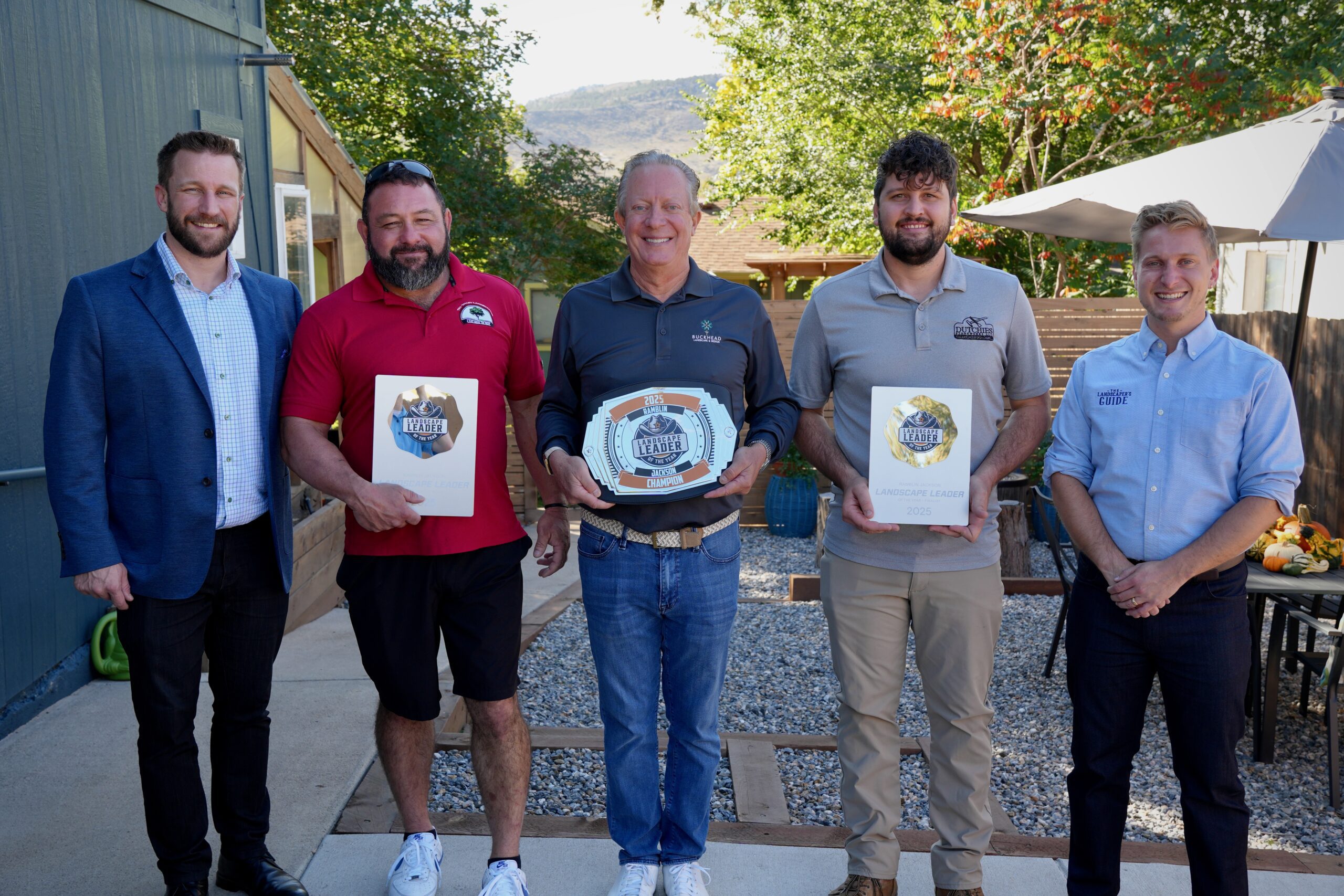
The Ramblin Jackson Landscape Leader of the Year contest happens each fall. Three finalists present their best leadership lessons, and the audience votes on the winner. The finalists fly out to the Ramblin Jackson video studio in Lyons, CO to present from Ramblin Jackson CEO Jack Jostes’ livestream desk where they also enjoy an in-person mastermind. In today’s episode, hear from the 2025 Landscape Leader of the Year Finalists:
- Dominick DePadre from Tri Valley Landscaping in Casa Grande, AZ
- Stuart Ward from Buckhead Landscape & Design in Buckhead, GA
- Michael Fisher from Dutchies Stoneworks & Outdoor Living in West Chester, PA
Transcript
Why Every Landscape Company Struggles With Sales
00:00
Stuart Ward
And the first step is a little bit painful, I'll be really honest. But you have to map out exactly what the whole sales process looks like.
00:07
Dominick DePadre
We're a family, and family looks out for each other. If, you know, if we're working together and you piss me off, that's between you and I. But ultimately, as a group, we're one.
00:18
Michael Fisher
Putting information on the website that they can start reading, seeing what you guys are about, what we're about, and being able to helping them set realistic budgets is ideally what the website is helping us do.
00:33
Jack Jostes
Hey, everyone. Welcome back to the Landscaper's Guide podcast. Today we're in the Ramblin Jackson video studio in Lyons, Colorado with the three finalists for the 2025 Landscape Leader of the Year livestream. It's the day before the contest. This is going to be coming out afterwards, but I'm really excited. These are three of my top clients who will be competing for the Landscape Leader of the Year tomorrow. You guys have each had amazing growth stories. I've gotten to know you today and just wanted to share some stories with the audience about your business and things you're working through. So, Michael, tell us a little bit about your company.
01:13
Michael Fisher
So Mike Fisher with Dutchies Stoneworks and Outdoor Living. We specialize in designing and building outdoor living spaces. We've been at it for about 20 years, so working with Ram Jackson for the past year. Interesting. Started with them right after last year's Landscape Leader of the Year event. So that's how I kind of found out about them.
01:34
Jack Jostes
Cool. And where are you guys?
01:36
Michael Fisher
We're in Lancaster, Pennsylvania, serve the main line of Philadelphia. So we're 30, 45 minutes from Philadelphia.
01:43
Jack Jostes
And what is your talk that you're giving tomorrow?
01:45
Michael Fisher
So tomorrow.
01:47
Stuart Ward
Oh boy.
01:48
Michael Fisher
I forget the exact title, but how our website went from the lease coming in from price shoppers to actually people that want to work with us.
01:59
Jack Jostes
Yeah, that's so cool. I can't wait to hear that tomorrow. And Stu, tell us a little bit about your business, where you're from.
02:05
Stuart Ward
Good morning. My name is Stuart Ward with Buckhead Landscape and Design. We are based right outside Atlanta in the Buckhead area. Been in business for almost 30 years. Hard to believe. I'm currently the owner in the process of transitioning over to our son Andrew next year. We focus mainly on maintenance, design, installation of outdoor living spaces.
02:28
Jack Jostes
Thank you. And what are you presenting tomorrow?
02:31
Stuart Ward
I am presenting on defining and developing an effective sales process.
02:38
Jack Jostes
Nailed it.
02:42
Michael Fisher
That is it.
02:44
Stuart Ward
And yeah, I look forward to presenting it tomorrow. I think it'll be great.
02:48
Jack Jostes
And then Dominick and Diana.
02:50
Dominick DePadre
I'm Dominick DePadre, Tri Valley Landscaping. We're out of a small town called Case Grande, just south of Phoenix, Arizona. Been at it for about 20 years. Just ready to kind of step up, get with the 21st century, and bring some technology and. And hopefully get some benefits out of some marketing tools. We're here because of my wife, Diana, who kind of brings all this to us.
03:18
Jack Jostes
And what is your presentation about?
03:22
Dominick DePadre
My presentation is focused on culture. I grew up in a kind of an athletic environment where people were family, and I tried to bring that into my company and create that camaraderie, that family of everybody looks out for each other and works for a common goal.
03:39
Jack Jostes
I like it. And, Diana, tell us a little bit about yourself.
03:43
Meet The Landscape Leader Of The Year Finalists
03:43
Diana DePadre
Well, I'm Diana, and I am Dominick's better half. And keep him in line, of course. How do I say that? Actually, I'm the run that brought him with Ramblin Jackson because of what he said before. He's part of that athletic family type group. That's what your company came across as. That's how you seem to treat your employees, all your customers. And so I was like, I think we'd be a great fit with you. So we've been with you about 10 months, and it's been wonderful all the way through.
Mastermind Insights And Shared Industry Challenges
04:11
Jack Jostes
Yeah, that's cool. And I think you found us through our podcast.
04:14
Diana DePadre
Yes, yes.
04:15
Jack Jostes
I always enjoy when I meet people, like, I'm like, where did you hear of me? Kind of thing. So.
04:20
Diana DePadre
Yep.
04:21
Jack Jostes
Well, great. So we. We had a. You all just met for the first time today. So you guys flew out from across the country. I'm super grateful that you did that. We're gonna get to speak, and we're spending the day together. We're gonna go on a hike. What did we do this morning, and what did you guys learn about each other's businesses?
04:40
Diana DePadre
We had our mastermind meeting, and I know I got a lot of little tidbits here on sales process, more technology to check into me.
04:50
Dominick DePadre
It just kind of. It's almost like therapy. I think I said that to stew outside this stuff is like therapy when you start finding out that all of us have kind of the same struggles. We're both learning, or we're all learning the same kind of processes and struggles. Stu's been in this for 30 years. He's sitting here trying to figure out a sales process. You know, he's brand new at it, trying to figure out the same sales process. So we're all in the same boat. And so it's kind of, it's comforting and like I said, somewhat therapeutic for all of us to be able to have this conversation and hopefully learn from each other.
05:20
Jack Jostes
So thank you.
05:23
Stuart Ward
Totally agree. I, we do all have the same issues. It seems like whenever I get together with other landscapers, you can make a list of the top three or the top five and everyone's struggling with the same thing. But I always walk away with some great ideas. I've already gotten a couple today from you, Dominick, on how you manage some aspects of your business. So I think it's fantastic to share ideas together. So thanks.
05:46
Michael Fisher
Yeah, I think the sales process is one. Everybody's trying to figure that out. But I think the interesting to me is the technology part. It's changing the way a lot of people do business. Whether it's using, you know, like you guys use LN. We use manage360 guys, tracking their time, giving them hours, understanding AI. I think that's like I come from a world where my dad used spreadsheets to do estimating and I came in there and said this ain't going to work. And you know, seeing him to adjust, I think it's just, it's really interesting to see where technology is going to take the industry, whether it's marketing or standard fuel operations stuff.
06:28
Jack Jostes
So. Yeah. And I think it is therapeutic. I go to, I'm in a mastermind with other digital agency owners and sometimes I go to like an in person thing and I think sometimes with social media and stuff or you read magazines, you're like, oh, all these people are killing it. They've figured it all out. No one really has figured all of it out.
06:53
Stuart Ward
It's constantly changing.
06:54
Jack Jostes
Yeah.
06:54
Diana DePadre
Yeah.
06:56
Jack Jostes
And I find in my own business that just when I think I've like figured one thing out, I, I learned like, oh, there's this whole other aspect of my business that I didn't even realize I need to work on. But that's also what's exciting about business, I think is that there are continually things to learn and improve and there's usually someone else who has figured out something already that I can learn from. What are some of the challenges you guys shared this morning? What did you learn that somebody else is having the same challenge. The reason I'm asking is the people listening are going to be like, oh, well, I'm not alone either.
07:36
Stuart Ward
Yeah. So I'm going to plug my presentation for tomorrow developing an effective sales process. But really the issue we discussed this morning was finding A salesperson that's gonna be effective within our company and what does that person look like? And once we find that person, how do we onboard them and give them a process to follow to make sure they're as effective as they can be to help the company grow?
08:08
Jack Jostes
Well, so what was your sales process challenge? And then what did we collaborate on? And because you're presenting what. What's worked to me.
08:16
Stuart Ward
Right, right.
08:17
Jack Jostes
So presentation recap.
08:20
Stuart Ward
Yeah, I won't give the whole presentation. I'll tell you how we used to do it.
08:24
Jack Jostes
Yeah.
08:26
Stuart Ward
And I joked this morning, welcome aboard, Mr. New salesperson. Here's the keys to the car. Call us if you need us. Sell a lot. That was our sales process and kind of worked for a while. But the person didn't really know what was expected of them. What were the metrics for success? We didn't know what to expect of them. They didn't know where to look. They didn't know we didn't have any process at all. So what I am going to talk about tomorrow is really putting together an effective sales process for any company to use. So once they find the right person, they have a roadmap, a framework to follow to get to the finish line and be successful. We worked with Robert at Ramblin Jackson, and the first step is a little bit painful, I'll be really honest.
09:16
Stuart Ward
But you have to map out exactly what the whole sales process looks like. Scripting all along the way, from the initial call in from a prospect all the way to the finish line. And you've got to think through everything that you want to say, where you want to lead them. And we mentioned this morning an unqualified lead, how to gently let that unqualified lead know that it's not a fit for you. And that's something that we always struggle with. We laughed this morning. For me, every lead is a qualified lead. But as we all know and Dominick, you mentioned this morning, every lead is not a qualified lead in a bad lead is going to leave the client unhappy and probably you unhappy.
09:59
Jack Jostes
Well, and then also, how does it impact your teammates or your employees having.
10:04
Stuart Ward
Unqualified.
10:05
Dominick DePadre
Yeah.
10:06
Stuart Ward
Unqualified.
10:06
Dominick DePadre
Yeah.
10:07
Stuart Ward
Because you're not going to be able to be successful.
10:09
Jack Jostes
So. So I think that that's how I find the strength to help people know is I think about the times when I've had clients come in who end up not being a fit and how much stress they cause for. We were talking about account manager retention at your company and my company at every. Every company that's a position that's difficult, and we're going to have difficult clients, and I like challenging clients. But there's like, a spectrum of, like, demanding, difficult, and then they're just disrespectful, rude. That's the PETA clients for sure. So that's why I think if the more you can weed out on the front end, to me, I'm weeding out, so that way I can then have a really great relationship with the clients who do come in.
10:58
Stuart Ward
Yeah.
10:58
Jack Jostes
And I can't have everybody. I can't have an amazing relationship with everybody.
11:03
Stuart Ward
And I'll give you an example of a typical lead that's unqualified. It's one that is below our minimum on a maintenance side. So say I'll just throw a number out there. They have $200 a month to spend on maintenance. And if we do 46 visits a year for that client, I cannot load a truck and get a crew there in Atlanta, traffic and unload the truck and service the property and move on to the next for $200 a month. I've already lost. So if I sold it now, the account manager is responsible for keeping that account on budget. So now they're pushing the crew to go faster, faster, because you're over budget. So now the crew's going faster. They're not doing what they're supposed to be doing. So now the client's unhappy because the quality's not there, and it just continues on and on.
11:49
Dominick DePadre
When.
11:49
Stuart Ward
If we had identified it right up front as this is not going to work, it would have saved everyone a lot of time all the way through.
11:56
Jack Jostes
Well, so you. You just. You just said $200 a month. I'm pretty sure you said that was what your first customer paid in the 90s.
12:04
Stuart Ward
135.
12:05
Jack Jostes
Okay. 1:30. 1:35, like 30 years ago.
12:09
Stuart Ward
Yeah, but that was with me pushing a mower, and I was. I was making 135amonth.
12:14
Jack Jostes
Yeah.
12:14
Stuart Ward
At the time.
12:15
Jack Jostes
But I mean. Yeah. So I. Your minimum might need to go up a little.
12:18
Stuart Ward
Yeah. I mean, we're in the mid fours now.
12:20
Jack Jostes
Okay.
12:20
Stuart Ward
And that does weed out a lot of people.
12:22
Jack Jostes
Whatever. Whatever the number is. Yeah. You need to know what that is.
12:26
Stuart Ward
Yes.
12:26
Jack Jostes
And so that was why I was advocating for. On that initial phone call and on your website, having a pricing guide. And on that pricing guide, you know, landscape maintenance starts at 400amonth and ranges up to. What does it range up to, Steve?
12:43
Stuart Ward
We have one resident sets over 8000amonth.
12:46
Jack Jostes
Up to $8000 a month. And maybe you show them a photo of an $8,000 estate state that has fine gardening and all these things. And then here's a 400amonth lawn maintenance account and they can see. Okay, but that way at least they can eliminate themselves from even talking to you if they're not at 400. I think the sooner we all learn that, the better off we all are.
13:13
Stuart Ward
Yeah.
13:14
Jack Jostes
And that was one of the pieces when were working on sales process that I like to have on that initial call is, hey, by the way, have you had a chance to check out our pricing guide? You know, typically our lawn maintenance starts around 400amonth. It can range up to 8,000amonth for really large projects. Is that in your ballpark? Oh, no, my other guy only charges me 50 bucks per visit.
13:40
Stuart Ward
It's the per visit ones.
13:42
Diana DePadre
Yep.
13:43
Jack Jostes
Yeah. Oh well, great. You know, how's that going for you?
13:46
Stuart Ward
Yeah. And one of the things we identified with Robert was early on in the qualification kind of red flags that you identify the customer. I bought some plants at Home Depot. I'm looking for someone to put them in red flag. I'm looking for bi weekly service. I'm looking for, I'm just going to pay you during the growing season and then we don't want to see you until, you know, things like that where they're just low cost shoppers. It's just not a fit for us and we try to weed them out before we ever get too involved.
14:19
Jack Jostes
So have you come to terms with telling people no?
14:24
Stuart Ward
It's a process. We're working on that. We're working on that. Yeah. And I think I mentioned earlier I have difficulty saying no to people, but other people in the company are much better at it. So we're much better weeding people out. Kind of our niche. We say we know Buckhead and what we're trying to say is we understand the type of clients that are in Buckhead. They're demanding, they expect detail. So we kind of joke like I just went and looked at a property and it's not, we know Buckhead. So we're already looking at it and saying this does not represent who we are or where we want to be and it's not going to be a fit.
14:57
Jack Jostes
So how do you tell them no?
15:02
Stuart Ward
Well, I don't. You hire somebody, other people to say it. Yeah, I think what our office person does, who does the initial conversation is she will mention the minimums and that normally weeds out the Low cost shoppers. So that's the first filter that we use at this point.
15:22
Jack Jostes
One of the things we talked about earlier. Where's that paper?
15:26
Dominick DePadre
Oh, the note paper?
15:27
Jack Jostes
Yeah, the note. Who's got it? So this was. I wrote no on a piece of paper and I put it on the table. So I like to call this putting no on the table. And what was that all about? Anybody remember what putting no on the table is?
15:44
Stuart Ward
Being comfortable telling a customer no, that it's not.
15:49
Dominick DePadre
You started with the negative so that you could work your way back to the positive.
15:53
Jack Jostes
So how is that landing with you, Dominick? Initially, I don't know that it settled.
15:57
Dominick DePadre
Well, I'm the kind of person, I have no problem telling people what I feel. I got no problem with that.
16:03
Jack Jostes
But.
16:06
Dominick DePadre
Again, I think I mentioned it earlier. There's a struggle between you working on building your company's cash flow and your cash reserves. But at the same time, you're filtering out potential revenues. And that is a challenge when you're looking at a bank account and you need to bring work in, but you want to do work where you're going to be, right? But you don't, but you don't want that work to be counterproductive. You know, you want that work to be fruitful. You want to, you want it to be a source of pride. You want to be able to do the quality that you do and make the money. I mean, obviously we're all in this to make a little money and provide for other people as well.
16:45
Dominick DePadre
And, you know, you brought up the team earlier and what's it gonna, you know, if you bring in that $201, what's it gonna, what's the trickle down effect of that? And a lot of times I will say no to customers, to one, just to protect my team. I've got, I've got solid teams out there and they don't deserve to be treated poorly as well. So if I have a client that's going to do that, I don't want that to be a part of it.
17:08
Stuart Ward
Have you ever fired a customer?
17:10
Dominick DePadre
Oh, more than once, yes. And I probably can't say it on this podcast what I've said to customers when I fired them. I've got no problem if they're, why.
17:19
Stuart Ward
Did you fire them? If they don't treat work, you'd already started working.
17:25
Dominick DePadre
Yeah, we started working. And, and if they're treating my people poorly, if they're talking down to them, if they're you know, being discriminatory, if they're being condescending, if they're doing it to my people, to my staff, to my office staff, it doesn't matter. I have no problem telling them where to go. I don't care if they're making 15 bucks an hour or we're in the office. People don't deserve to be treated that way. And I'm not going tolerate it from anybody. I don't care how much money you got. So, you know, that's kind of how I am with that.
17:54
Jack Jostes
How does that tie into your talk about culture?
17:58
Dominick DePadre
My talk about culture is we're a family, and family looks out for each other. If, you know, if we're working together and you piss me off, that's between you and I. But ultimately, as a group, we're one, and we look out for each other. And I say that. And she knows it's not just about my staff. It's about our clientele as well. When they come in as our clients, they become part of that family unit, and they have a tendency to get a little protective of us, too. So it does happen.
18:29
Jack Jostes
What do you mean? The client gets protective of you?
18:31
Dominick DePadre
Gets protective of our company. I've had, you know, if you get one person that has something negative to say, I've had clients go to bat for us, both publicly and privately. And so it's that culture that we try to create throughout.
18:45
Jack Jostes
I've had that experience, too. So I'm running. You mentioned coming to our landscape leader of the year. I typically run meta ads, so I'm out on Instagram and Facebook for this event, and people come out of the woodwork with negative comments. And I've had clients reply and be like, no, actually, this is a legitimate company, and I'm their actual customer. And you don't know what you're talking about. So I think when you take care of people, they. They will do that.
19:12
Dominick DePadre
And that's. And that's the idea. And so from, you know, from the client standpoint, we. One of the things we're focusing on is their lifetime clients, which means you're, in theory, going to be generating revenues from that client over years to come. You know, that's part of that deal. But from the staff standpoint, if they feel cared about feeling. They feel like they're important, they're gonna be more productive. They're gonna have your company's interest in mind when they're out there working. And that's my philosophy. That's how I try to approach it. And I've approached it that way for 20 years, so I like it. You know, that's kind of where I'm at.
19:54
Jack Jostes
I'm curious, Michael, what are you thinking about? How does your website. Your website, your whole presentation is about weeding out tire kickers and pro price shoppers. How does your website do that and how does that relate to putting no on the table? Maybe.
20:09
Michael Fisher
No question is hard for me because I look at kind of like everybody that calls is potential revenue, and I want to solve their problem. So that's been a big challenge for me is learning how to say no. But I think the website, after working with you guys, has given us a lot of, you know, we ran a lot of meta ads, Instagram ads, you name it, everything before working with you guys. And we did. We worked. We didn't run any up until this month. All year since we started working with you guys. And we've gotten more better qualified leads. And a lot of it has to do with. On our website, we have. We put a pricing guide up there. We filter the questions, they fill out the form. You know, they schedule.
20:56
Michael Fisher
They can schedule a call with one of us right away. A lot of people, as soon as they start, you know, even just looking at a project gallery and starting seeing price tags on, you know, different projects. Like, I had a different. Just a phone call the other day, a customer call, say, hey, I like project number 25 or whatever that's in our budget. Let's design something like that. So great starting point. So a lot of that just putting information on the website that they can start reading, seeing what you guys are about, what we're about, and being able to versus them just calling right away and say, hey, I got a $20,000 budget. And I'm like, I can't build what you want for that. Helping them set realistic budgets is ideally what that website is helping us do.
21:46
Jack Jostes
Well, and I think unless they're a professional landscape contractor or they've already hired one, how would they. How would they have any idea what this would cost? I mean, how. I mean, it's pretty complicated to create a budget for a landscape project. And I mean, it's simple, but it's also like, you'd have to.
22:07
Stuart Ward
And I would think the pricing guide also kind of weeds out people that don't have the budget to do the jobs. It's really kind of eliminating that whole group of people because they already kind of know what to expect before they contact you.
22:22
Jack Jostes
Well, and I see the pricing, as far as putting no on the table, on that initial call, it would sound something like, hey, you know, I'm going to ask you a few questions to help us figure out if it makes sense to do the next step of having our estimator come out to your property. And hey, sometimes we're not actually able to help people. I might have a referral or I might have a resource to send to you. Would that be okay if, you know, I ended up realizing I can't help you if I told you so that now I'm putting it on the table. That's what to me. What putting no on the table. So that way, in that call, if I'm like, by the way, have you had a chance to look at our pricing guide on our website?
23:00
Jack Jostes
Oh, no, I haven't. Oh, tell me more like what were you thinking of doing? We want to do a patio and we want a retaining wall and a fireplace and a grill. Like, what are you guys thinking right now in terms of dollars?
23:15
Michael Fisher
Retaining wall a lot.
23:17
Diana DePadre
Yeah.
23:18
Jack Jostes
30, 50, 70.
23:20
Dominick DePadre
Like 50.
23:21
Michael Fisher
Right.
23:21
Jack Jostes
So you're, that's what I was going to guess that you're all in the 50s. Oh, okay. Well, typically projects that have a retaining wall, a patio, a grill, but they're going to be in north of $50,000. Sometimes some of them are even 100,000. Is that in the rough ballpark of what you were thinking? Oh my gosh, who would spend that on anything that now I've put. Since I put no on the table. Hey, what were you expecting? Oh, 5,000.
23:50
Dominick DePadre
That goes to what I was saying earlier too, man. Philosophy of kind of upping the image of landscape contractors. Yeah, you know, it's, you start doing things like that, then we come across as being more professional, more prepared, more educated. And that presentation kind of ups the image of landscape contractors as a whole. I really think it needs to go up.
24:16
Jack Jostes
Well, I think it does. And then if I say to that person, hey, it sounds like you're in the research phase, would it be okay if I emailed you our pricing guide? It has ranges and it'll help you plan your budget. They'd probably like.
24:30
Stuart Ward
Yeah.
24:31
Jack Jostes
And now if I get them into my system and I automate some follow up emails to them a few weeks later. Hey, have you had a chance to review our guide? Are you still thinking of doing a project? Chances are they're going to call a couple other landscape contractors who aren't going to show up on time. They're not going to send a proposal on time, and they're probably not going to be as upfront about budget as you were. So I think that actually telling them no or like, hey, it sounds like you might need some resources. I think it builds trust with that person. And maybe in three weeks they realize that they do need to spend 50 and they do have 50, but they were starting with, they just didn't know what they needed at the beginning.
25:14
Stuart Ward
You saved yourself the time of going.
25:16
Jack Jostes
Out on a call that's probably not going to go. I mean I've worked with hundreds of people, I've done masterminds at all kinds of conferences. And the amount of owners, landscape companies who are driving an hour to meet with somebody for an hour to then get to the. I have 5,000 for what starts at 50,000. Happens all the time. And many of them still go through with the hours of creating a proposal. And I don't think that actually serves the client for them to come home and wait for an appointment with you to get to the fifty thousand dollar ballpark conversation. That's my thought. What are you guys thinking? Does this make sense? Like should we do it?
25:58
Stuart Ward
It makes a lot of sense.
25:59
Jack Jostes
Should we do it sooner on the phone?
26:01
Diana DePadre
Absolutely.
26:02
Michael Fisher
I think talking budget is what I've learned on the phone. Like that's, you get them, I try to get them to put it in their, the web form sometimes. They don't always do it, but getting like. I had one guy call in about a front walkway project, couple plannings, small retaining wall, I think. And he had gotten two other prices already and he had sent me an email with I could see copied part of somebody else's quote and I'm like, okay, this guy's price shopping. And I was, I had our estimating software pulled up. I was punching numbers as I was on the phone with him and I was like, hey, you know, we're gonna be at the 25 to 30, you know, okay range. And he's like, well I got a price for 12. I'm like, I mean I didn't see the property.
26:44
Michael Fisher
But he's like, why can you. And he kept asking questions like why is this guy less? And why he made the mistake of letting the one guy's name in the one part of the. What he copied and paste. So I pulled him up and I could see he's, you know, one truck maybe doesn't have a website. You know, I explained these things to him. You know, that's why we are in the higher end. You know, we're not gonna, we're not well, we're not here today, going tomorrow type of people. We've been around for 20 plus years.
27:10
Jack Jostes
So I have a folder in Google Drive. It's called the True Cost of Cheap Website Design. And it's photos of websites that have been hacked over the years that, like, redirect to porn or like, yes, malware. Yeah, Right. So you've seen this. And so when I get this, I'm like, hey, can I show you what happens when people don't spend enough on what you're talking about? And they're like, okay. And I share. Usually I'm on zoom. And I'm like, hey, what do you. What would you think if your website redirected to this? And I don't even speak, I just show them this folder of it. So I'm. And that's been really effective for me because people are like, oh, I had not thought that it could go that bad. So I think you got to be prepared with some stories or photos or.
28:01
Jack Jostes
I don't know, I'm just wondering if you, like, have you gotten any photos of like a retaining wall that's burst open or a. Well, I had somebody on the podcast, they do commercial, and when they lose an account, they go and take pictures of it when they're driving by and they're. And they show the client, here's what your. Your property looked like when I was doing your maintenance, and here's what it looks like now, and they can see the difference.
28:30
Stuart Ward
Wow.
28:31
Jack Jostes
So I think. I guess what I'm getting at is you got to have some stories, and if you can show people visually a landscape disaster or an article about a landscaper who's in jail from your town or like, you know, these, like, the more that you can make the stories real, I think it helps them get it because again, if they haven't gone through the pain of hiring somebody who has failed them in any kind of construction, they won't get it. And I think you have to. I don't know, I think you have to have some stories to show people. Have you guys found any? That.
29:09
Dominick DePadre
I just educate them. I don't. I don't have. I don't have any good stories. I mean, I could probably drum some up pretty easily, but I. In Arizona, and I don't know what's true for the other states, but in Arizona, in order to do work over a thousand dollars, you got to be a licensed contractor, which means testing background checks and various processes to go through that bureaucracy. And so what I try to do is I just Try to educate people. I have an illustration that I made of potential things that go wrong on a site. And then who's liable? If a wall falls down and your contractor's in the wind, who's responsible for it? You are.
29:52
Jack Jostes
Right.
29:53
Dominick DePadre
If he's a licensed contractor. No, you just call the ROC and you'll get some sort of retribution. If a guy gets hurt on your job site, who's going to get sued? The homeowner because he's not licensed and he's not covered by insurances. So those are the things. I try to educate these people.
30:10
Jack Jostes
So how often do you think the people that you're losing on price to are unlicensed contractors?
30:16
Dominick DePadre
I'd say at least half of the projects I lose are to unlicensed guys.
30:20
Jack Jostes
And would you be able to look it up online if you knew the name of their business?
30:26
Dominick DePadre
I could and I have. I've actually, I have actually reported them to the roc and I've actually had conversations with inspectors and people from the registrar contractors and it's one of those things that they just don't have the resources to enforce.
30:46
Jack Jostes
Well, one of the other things from our mastermind this morning. One, I was saying pre qualify on the phone and two, if you can. What was the other thing? Present the proposals.
30:56
Michael Fisher
Yeah.
30:58
Jack Jostes
If you meet with them either over zoom or in person and you say, hey, sometimes I would let them know. It's. It's often normal that people get more than one estimate. Are you planning to interview anybody else?
31:10
Dominick DePadre
Oh, I asked that up front every time.
31:12
Jack Jostes
And they'll probably say, well, yeah, we've got, you know, Tom, Dick and Harry coming over and say, great. Typically one of them is going to be like a third or a half of my price. If that happens, would you allow me to review the proposals with you and see if they're apples to apples? I might recommend you go with Larry, who's half my price and I've got work to do. Sometimes though, they're not licensed and there might be things missing from their proposal and I might be able to help you navigate that out because if you can, sometimes some people will say no. Just email me your thing. I'm not going to meet with you.
31:51
Jack Jostes
But if I meet with them a lot of times and you can get a proposal from other people, you could look them up and be like, hey, what I'm realizing is this is not a licensed contractor. What do you think would happen if one of their mason workers injured themselves on your property?
32:11
Dominick DePadre
And I have brought those things up. I have brought that to.
32:15
Jack Jostes
A lot of times the homeowner hasn't thought of that. They're like, oh, I didn't realize I would be liable for that.
32:21
Dominick DePadre
Yeah. And that's again, that's one of the things I educate them on a lot of times. And I've heard this, if I had a dollar, I probably wouldn't have to landscape as much time as I heard this. But I get a lot of people in retrospect come to tell me they wish they would have gone with us at that point. It's not the licensure thing. What it is you'll get these guys that'll come in with, you know, they'll do a half a day on this project and then a half a day on that project. They'll be back in a week to finish this. And so a project that should take two to three weeks is taking two to three months. And so these people are getting agitated, but at that point they're committed and I've already lost it.
33:00
Dominick DePadre
So now it's to try to, at that point, it's just trying to gain some credibility. And I always tell them, well, don't worry, we'll come back and fix what they screw up. But that rings true quite frequently. Unfortunately, we're not getting the big chunk, we're just getting the little polish up there turn kind of thing.
33:19
Jack Jostes
But maybe you can do their front yard when it's time or whatever.
33:23
Dominick DePadre
Yeah, it's a battle.
33:27
Jack Jostes
And that would be a good story to get in a Google review. If you could prompt someone to be like, hey, in your Google review, could you write about how you hired somebody else? It went poorly and we fixed it because that's again, that's a story that when you're selling to people, you can direct them to that Google review or something. I'm always trying to find either. I always try and record video case studies or get reviews about specific sales objections that I have because then I can send them to people if I, I don't know if I'm facing an objection about, well, this doesn't work in Arizona. I'd be like, well, have you met Dominick? You know, here he is. Oh, that works in Arizona. Oh, okay.
34:08
Stuart Ward
Yeah, I totally agree with the presentation of the proposal. I think a lot of us get busy and get lazy and just 100% send out an email and hope they call. And we've done that way for years. But our success rate is so much higher when you sit down with the client and you walk through the Proposal because you can address any objections right there. Maybe they're misreading it or they aren't clear in some aspect of it. So you can walk through and talk about your references or other projects that are similar.
34:44
Jack Jostes
You may need to phase it. You may need to say, hey, you know, how does this look? Oh, man, this is $10,000 more. Well, you know, we could phase that. We could do that next year or the following year.
34:55
Stuart Ward
You solve the issue.
34:56
Jack Jostes
And they're like, oh, I never would have thought I could remove that.
34:59
Stuart Ward
Yeah.
35:00
Dominick DePadre
To add to that too. I agree that presenting it in person is valuable. One thing I learned and I stopped doing it, I need to go back to doing it is when you do that initial appointment where you're just kind of consulting, figuring out what it is they're looking for to make that follow up appointment right there.
35:19
Stuart Ward
Yes. And that's one of raw makes.
35:21
Dominick DePadre
I failed to do that. I learned a lesson a long time ago.
35:24
Stuart Ward
And you send them an invite in.
35:25
Dominick DePadre
Outlook immediately right there in that appointment.
35:29
Jack Jostes
Well, because here's what happens. I mean, I recently had to do a construction project at my home. And unfortunately, I mean, we had really interesting meetings with some remodeling company and weeks go by and they don't send you the proposal. And you're like, well, what are they doing? Are they even gonna, are they even gonna help me? And when you have that calendar, when you have an appointment with somebody, the search kind of stops. Like, that's what I learned as a homeowner was like, I was kind of on the hunt for somebody to do this project that I needed to have done because I had a water damage problem. And I, like, I needed to re. I needed, I need a kitchen. Right, Right. So, yeah, when you get it in the calendar, the search often stops.
36:16
Jack Jostes
They're like, all right, the first two people haven't even replied. This, this guy sent me a calendar invite and sent me a thank you email after the meeting. Like, and I'm feeling he's got photos and reviews. Like, all these things are on track. And I love getting it in the calendar at that meeting.
36:36
Stuart Ward
Yeah, if you're presenting the proposal, it's a little bit harder to say no. When the customer is face to face with you, it's easier to manage the objections and it's a little bit harder for them to say no. So I think the success rate is quite a bit higher.
36:50
Jack Jostes
I think it is. And also a lot of my clients are having success doing it over Zoom. Because I think the best case is, if you're dealing with a couple, is to present to both people and Zoom, a lot of times, if one of them. If they're both working at different times or they can't both be home, they might be able to join on Zoom. So that can also save you drive time. And if you're in your estimating software, your design software, you can be like, cool, Let me spend, like, a minute changing this for you. Like, what do you think of this? I removed the fire pit, and that saved $7,000 or whatever.
37:30
Dominick DePadre
I always try to. Just on that family thing, I always try to make sure I know both of their first names. Always. Because it's more personal that way.
37:37
Stuart Ward
Yeah. And I always address them by their first name. Always. Always. Because if you say Mr. Smith, you're automatically putting him there and you're here. So if I say Dominick, we're here.
37:50
Jack Jostes
Well, so part of my own sales process is I hand write the names of the people. People I'm meeting with.
37:56
Dominick DePadre
Oh.
37:56
Jack Jostes
And that helps on my own little paper place. So that way I know I'm looking. I'm meeting with Michael and Martha.
38:03
Stuart Ward
Yeah.
38:03
Jack Jostes
How are you doing today? Like, I'm. I. And I. If I, like, forget, I can look at my notes.
38:08
Stuart Ward
Y.
38:08
Dominick DePadre
Right.
38:09
Jack Jostes
Because I have. Have you ever called somebody by the wrong name?
38:14
Stuart Ward
Yeah, I sent an email the other day.
38:16
Jack Jostes
Yeah. Oh, yeah. Email thing. Right. So anyways, yeah, it kind of. That.
38:21
Stuart Ward
It really.
38:22
Jack Jostes
That's a good way to.
38:23
Stuart Ward
Now this is valid. It was a Hispanic woman with all these last names. Julio, Jalio, Rico, and J. And I was like, is that her first name? Well, it wasn't. It was, like, part of her last name. So I got it right, but I just didn't have the right order. Order.
38:40
Jack Jostes
Well, I think you can ask.
38:42
Dominick DePadre
Oh, yeah, I have no problem asking.
38:44
Jack Jostes
Like, hey, am I saying your name right? What else did you guys take away? We got to go get some barbecue.
38:51
Stuart Ward
I had one other thing, and we haven't talked about it.
38:54
Jack Jostes
Yeah, let's talk about it.
38:55
Stuart Ward
It's. And this is a little bit of a Sandler thing, but it's responding to incoming leads and the speed with which you respond. And they said, I don't remember the exact numbers. Three to five minutes. So if you get a lead and if you can call them in three to five minutes, your success rate, huge. And actually, the day I listened to that Sandler presentation, I got a lead that afternoon. I was like, I'm gonna try it. And I called the guy and he goes, well, that was fast. And I said, well, thank you. And I went on the sales call and we got it. He didn't even talk to anyone.
39:30
Jack Jostes
Well, so I'm totally with you on that because again, have you all tried to hire a contractor for anything? Sure, yeah. Like usually you call and no one answers and no one calls you back. So then you're like, well, I'm available to call people. I'm gonna call the next company on Google or whatever. So being the first one to get back to them is absolutely.
39:53
Stuart Ward
And you know, they're thinking about it right then. Yeah, probably right there. So you're not leaving messages.
39:59
Dominick DePadre
She's not gonna pipe up right now. You haven't helped my case. She's over here giving me dirty.
40:04
Stuart Ward
But you can't wait a day or two. No, it's already cold.
40:07
Dominick DePadre
She's over here giving me the. Because part of what we're on our entry form, our submission form on the website. She was talking about the HubSpot thing where the minute they submit something on the submission form, they instantly are getting a text back going, hey, if this is during business hours, somebody will call you within 30 minutes. If this is after business hours, someone will call you the very next morning. You know, but they feel validated because now they've gotten a response back then.
40:32
Stuart Ward
Going to some black hole.
40:34
Jack Jostes
I love it. And sometimes it's could even be. I mean, best would be calling people, but it could even be a text message like, hey, it's Dominick. I saw your message. I'm at a. I'm at a job. This could even be automated. I'm at a job site and I'm going to be calling you today.
40:49
Diana DePadre
Exactly.
40:49
Dominick DePadre
And that's exactly what she said.
40:51
Jack Jostes
Okay. Dominick from Tri Valley.
40:53
Diana DePadre
That's how we wrote the message. So that's very personalized.
40:57
Michael Fisher
You're right.
40:58
Dominick DePadre
She's right. She's been preaching that to me for a while.
41:01
Stuart Ward
Get them on the phone, like.
41:02
Jack Jostes
Right, yeah. Because I think really what you're after is the customer is looking to feel like they have someone who's going to help them. Yeah.
41:08
Diana DePadre
Yes.
41:09
Jack Jostes
And then they can kind of relax on the search.
41:11
Stuart Ward
Okay.
41:11
Diana DePadre
Yes.
41:12
Jack Jostes
I'm writing a new book right now and I just, I have a whole chapter on this. So you're on track stuff. So I have the number I found. I call it the five minute golden window. And so if you call within five minutes, you're 21 more times likely to make the sale than if you wait after 30 minutes. Also the first respond. I'm calling it the first responder advantage. 78% of customers buy from the first person who answers.
41:42
Diana DePadre
So true.
41:43
Jack Jostes
And they. Yeah. And also I talk about how the bar is so low in landscaping that if you blow it and it is tomorrow or two days later, like some people get embarrassed and they don't call.
41:57
Stuart Ward
Still call.
41:58
Jack Jostes
Because the chance that the other companies they called didn't call is likely. Right.
42:04
Diana DePadre
In fact, I've called them back and it started right away. First, let me apologize. You were getting this phone call within 24 hours since you sent that message. You know, change of staff, whatever was happened, I said, if you haven't found anybody, I love to go over everything we do. And a lot of times we got a job, nobody else got back to them.
42:24
Jack Jostes
It's kind of that simple.
42:25
Diana DePadre
It is.
42:26
Stuart Ward
It really is. Sick business.
42:28
Jack Jostes
Yeah.
42:30
Dominick DePadre
Communication. The people love it so.
42:33
Jack Jostes
Well. Yeah. I appreciate you guys coming out to Colorado to present the Landscape Leader of the Year and for doing this podcast.
42:40
Stuart Ward
Yeah, our pleasure.
42:41
Dominick DePadre
Thanks for making me come to Colorado.
42:44
Diana DePadre
Thanks for having us.
42:45
Jack Jostes
All right, everyone, thanks for watching this podcast with the 2025 landscape leader of the Year finalists. Really fun conversation. And if you're looking for a marketing team that can partner with you that understands the landscape industry, reach out to us https://landscapersguide.com/brainstorm. We'll have a 15-minute conversation about your goals, your business, and give you some ideas to get more Hell yes. Customers. My name is Jack Jostes and I look forward to talking to you next week on the Landscaper's Guide